Short stories
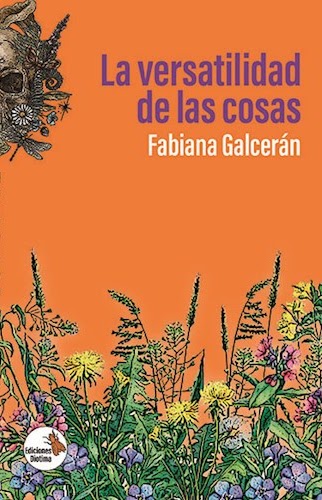
La versatilidad de las cosas
Once upon a time there was a story. It shone with a surprising ending. Our reading memory recalls it, looks for it, but cannot find it. We have since carried on with our long reading lives, always with the same eagerness: to find that which once moved us, that pearl, that aleph which is, and in which all stories rest. Fabiana Galcerán has found it. Word of honor. Each of her tales bears witness to it.
A woman who is prescribed a cure made from exotic plants. Another who lives in a solitary old house that is suddenly invaded. An art dealer who discovers a brilliant, unfeeling artist. An unsettling Chinese box. Whether in the darkness of the jungle or in the very heart of the city, each story opens like a flower to the mystery of its fragrance, and we, bewildered reader-bees, fly out to meet it with that same winged enthusiasm.
“These are contemporary stories. These are ancient stories. The one in the other. The other in one.” — Mariano Ducros
A note from Fabiana
A series of stories that emerged from dreams and from situations in everyday life. I always say that if stories come to me, it is because I am waiting for them; it is a bit like Cortázar used to say: I am a kind of medium who receives them. And when an idea lingers in your mind for some time, it is because there is something there that deserves to be told. That is the point at which technique begins to take shape: the choice of narrator, the style, and everything else fuses into literary creation.
After selecting the stories that would make up the book, I felt it was important to look for similarities among them in order to find a common thread. I grouped them into different sections according to thematic affinities or to the treatment of voices and language.
I am fascinated by the process of researching different cultures, as reflected in “La caja china” (The Chinese Box), in “Crónica de un joven entomólogo” (Chronicle of a Young Entomologist) or in “El umbral” (The Threshold). Exploring the mystery held by a solitary old house in “Como ella” (Like Her), or how a desperate woman finds a cure for her inescapable sadness without considering the possible “Efectos secundarios” (Side Effects); an art dealer’s hesitation between following an impulse that would lead him to fame at the cost of an irreversible choice, as in “Ochoa,” or the shape destiny takes at a crossroads, as in “Encrucijada” (Crossroads).
I sincerely hope these stories captivate you and that you enjoy reading them. — Fabiana
Where to get it
Spanish edition. Also available at Yenny — El Ateneo and at your favorite bookstore.